The Many Faces of “Michael LaVaughn Robinson”: Separating Fact from Fiction
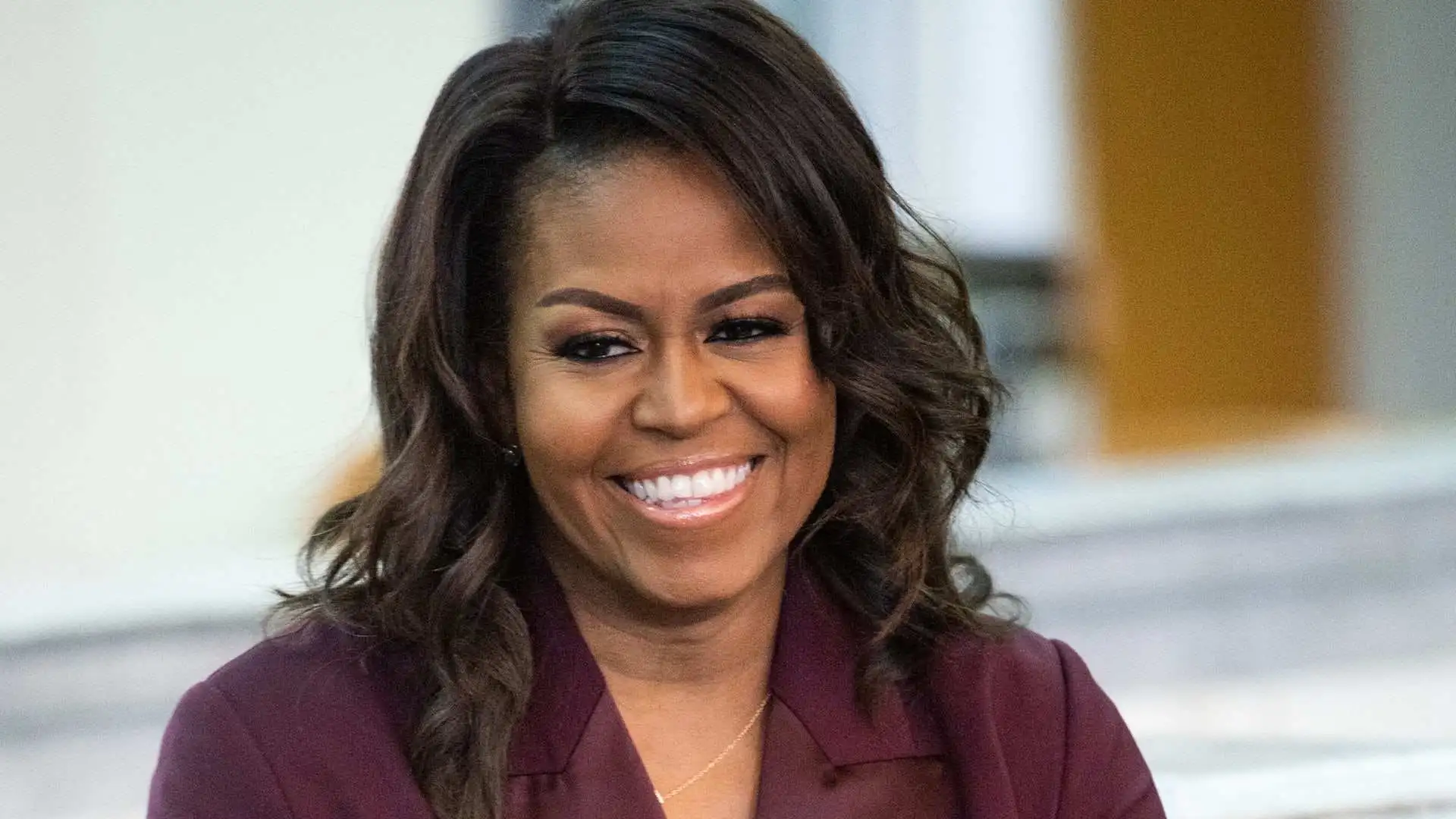
The name “Michael LaVaughn Robinson” exists in a curious and often contradictory space within public discourse. For some, it is a name that evokes the rhythm of tap shoes on a hardwood floor and the legacy of a Philadelphia jazz legend. For others, it is a name whispered in the dark corners of the internet, attached to a bizarre and thoroughly debunked conspiracy theory about former First Lady Michelle Obama. The truth is that these are two entirely distinct individuals whose identities have been unfortunately and deliberately conflated. This article aims to unravel that confusion, paying respect to the actual historical figure of LaVaughn Robinson while dismantling the harmful myths surrounding the false narrative of “Michael LaVaughn Robinson.”
On one hand, you have LaVaughn Robinson, a genuine American treasure and a giant of tap dance. His life was one of rhythm, innovation, and cultural preservation, spent perfecting a craft on the streets of South Philadelphia and on stages around the world. On the other, the internet has spawned a fictional character named “Michael LaVaughn Robinson,” a phantom created by bad actors to attack the legacy of Michelle Obama. By examining both narratives—the real and the fabricated—we can better understand the importance of historical accuracy and the dangers of misinformation in the digital age. This exploration will celebrate the life of a true artist while shedding light on how quickly a fictional narrative can spread when it is designed to deceive.
The Rhythm of a Legacy: Remembering the Real LaVaughn Robinson
To understand the true significance of the name LaVaughn Robinson, one must travel to the vibrant and competitive streets of South Philadelphia during the Great Depression. It was here, in 1927, that LaVaughn Robinson was born into a large family—one of seven brothers and seven sisters . The atmosphere was electric with rhythm; the legendary Nicholas Brothers and Condos Brothers honed their skills in the same neighborhood. It was his mother, Catherine Griffin Robinson, who gave him his first step—the “plain time step”—at the tender age of seven . But it was the street corners that became his real classroom. Dancers would battle for prime busking locations, with the ultimate prize being the corner at Broad and South Streets. The competition was fierce, a display of prowess akin to “a gunfighter riding into town and challenging the local champion,” and it forged Robinson’s signature style: fast, precise, and deeply rhythmic . By the age of 13, he had claimed Broad and South as his own, earning money to help his family and learning the art of captivating an audience.
Robinson’s career spanned over 70 years, taking him from the streets to the most famous stages in the country. After serving in the Army, he entered the world of club dancing, performing with partners like Howard Blow and the legendary Henry Meadows, with whom he had a 40-year partnership . He graced the stages of the Apollo Theater with Ella Fitzgerald and opened for bands led by Cab Calloway and Tommy Dorsey . He even shared billing with jazz greats like John Coltrane and Charlie Parker, navigating the changing musical landscape from the swing era to bebop. His style was uniquely his own; a “virtuoso” known for his “high speed, low to the ground, a cappella style” that emphasized elegance and clarity of sound . He called his approach “sound tap,” where the taps themselves became the primary music, making accompaniment feel like a distraction. This innovation elevated tap from mere visual entertainment to a complex, percussive musical form.
In the later decades of his life, LaVaughn Robinson transitioned from performer to professor and preserver, ensuring that the history and technique of tap dance would not be lost. In 1980, he joined the faculty of the University of the Arts in Philadelphia, teaching a generation of dancers the études he had developed over his long career . His contributions to American culture were recognized at the highest levels. The National Endowment for the Arts awarded him a National Heritage Fellowship in 1989, a lifetime honor that recognized him as a “Living National Treasure” . He also received a Pew Fellowship in the Arts in 1992. His solo piece, “Artistry in Taps,” was a masterwork developed over decades, encapsulating the rhythmic complexity and innovation of his life’s work. When he passed away in 2008 at the age of 80, he left behind a rich legacy, not just in his recordings and performances, but in the countless dancers he taught and the art form he helped to evolve . His was a life of genuine, rhythmic greatness.

The First Lady: Michelle LaVaughn Robinson Obama’s True Story
While LaVaughn Robinson was perfecting his craft in Philadelphia, a different kind of legacy was being built in Chicago. On January 17, 1964, Fraser and Marian Robinson welcomed a daughter, Michelle LaVaughn Robinson, into the world . Growing up in the South Shore community area of Chicago, Michelle’s upbringing was grounded in family, hard work, and education. The Robinson family, like many American families, found joy in simple things: playing board games like Monopoly, reading together, and sharing meals . Her father, Fraser, was a pump operator for the city’s water department, and her mother, Marian, was a devoted secretary. This environment of stability and emphasis on learning propelled both Michelle and her older brother, Craig, forward. They were so academically advanced that they both skipped a grade, with Michelle being placed in a class for gifted students by the sixth grade . She went on to attend Whitney M. Young Magnet High School, Chicago’s first magnet high school, where she was a honor student and class treasurer.
Michelle’s academic excellence paved the way for an Ivy League education that would seem to be a world away from her South Side roots. She followed her brother Craig to Princeton University, graduating cum laude in 1985 with a degree in Sociology and a minor in African American Studies . Her senior thesis, titled “Princeton-Educated Blacks and the Black Community,” was a telling sign of the social consciousness she would carry with her throughout her life. From Princeton, she went on to Harvard Law School, earning her Juris Doctor (J.D.) degree in 1988 . This educational journey was not just about personal achievement; it was a testament to her determination and a foundation for a career dedicated to public service. After Harvard, she returned to Chicago, joining the prestigious law firm Sidley & Austin, where she worked on marketing and intellectual property law . It was there that she was assigned to mentor a summer associate, a young Barack Obama, setting the stage for a partnership that would eventually lead to the White House.
Before becoming First Lady, Michelle Obama had already established herself as a prominent community leader and executive. She left corporate law to pursue a career in public service, working as an assistant to Chicago Mayor Richard M. Daley and later as the Executive Director for the University of Chicago Medical Center’s community affairs department . As the 44th First Lady of the United States from 2009 to 2017, she did not merely serve as a ceremonial figure; she became a powerful advocate for healthy families, service members, and higher education. Her “Let’s Move!” campaign was a nationwide initiative to combat childhood obesity by promoting healthy eating and physical activity, leading to significant policy changes in school nutrition programs . She championed the “Joining Forces” initiative with Dr. Jill Biden to support veterans and military families. Globally, she launched “Let Girls Learn,” an effort to help adolescent girls around the world attend and stay in school . Throughout her tenure, she was admired for her intelligence, grace, and eloquence, becoming one of the most popular and influential First Ladies in American history and a role model for women and girls worldwide.
Anatomy of a Lie: The “Michael LaVaughn Robinson” Conspiracy Theory
In stark contrast to the documented lives of the tap dancer and the First Lady, the internet is home to a completely fictional character: “Michael LaVaughn Robinson.” This fabricated persona is the centerpiece of a long-debunked and deeply transphobic conspiracy theory that emerged in the mid-2000s as Barack Obama’s political star began to rise. The false narrative posits that Michelle Obama was born male, named “Michael LaVaughn Robinson,” and that she underwent a secret gender transition in the early 1980s . This story is entirely without evidence and has been universally rejected by fact-checkers and reputable news organizations. It exists purely as a tool of character assassination, designed to delegitimize and mock a powerful Black woman in the public eye. The theory is a textbook example of how misinformation can be crafted to exploit societal prejudices and spread rapidly through unregulated online spaces .
The details of this conspiracy theory are as outlandish as they are verifiably false. The narrative, often found on fringe forums and discredited websites, claims that “Michael” was a star linebacker for the Oregon State University football team, amassing an impressive 88 tackles and 7.5 sacks in his freshman year before dropping out . It further alleges that he underwent sex reassignment surgery at Johns Hopkins University in 1983 before transferring to Princeton University under his new identity . Every single one of these claims is fiction. Oregon State University has no record of a football player by that name or description from that era. The timeline is also impossible, as Michelle Robinson graduated from Princeton in 1985, meaning she would have had to start there immediately after a supposed surgery and transfer, all while maintaining a secret that would have required the complicity of hundreds of people. The theory also relies on debasing the memories of Michelle Obama’s real parents, Fraser Robinson III and Marian Robinson, by falsely characterizing them in vile and untrue terms . It is a malicious fabrication from start to finish, lacking a single shred of credible documentation.
The persistence of this “Michael LaVaughn Robinson” myth is a powerful case study in the anatomy of a smear campaign and the modern information ecosystem. It functions not by presenting evidence, but by creating an alternate, sensational reality that is easy to grasp and share, especially for those predisposed to dislike the Obamas. The internet, particularly anonymous forums and social media, allows such content to circulate without editorial oversight, giving it a veneer of legitimacy through sheer repetition . It preys on transphobia and racism, using the former as a weapon for the latter. Furthermore, the confusion with the actual, celebrated tap dancer LaVaughn Robinson adds a layer of accidental (or perhaps intentional) obfuscation, making it slightly harder for the casual researcher to immediately dismiss the claims. This underscores a critical point: in the digital age, a well-told lie can travel halfway around the world before the truth even has a chance to put its shoes on.
Conclusion
The divergence between the real and the fabricated in the story of “Michael LaVaughn Robinson” could not be starker. On one side, we have the tangible, rhythmic legacy of LaVaughn Robinson, the Philadelphia tap master whose life was dedicated to the pursuit of artistic perfection. His story is one of community, innovation, and cultural preservation—a narrative supported by decades of performances, teaching, and national honors . On the other side, we have the inspiring and well-documented public service of Michelle LaVaughn Robinson Obama, a lawyer, advocate, and former First Lady whose achievements have left an indelible mark on the United States and the world . Wedged between these two truths is a phantom: the fictional “Michael LaVaughn Robinson,” a name used as a vessel for hateful and baseless conspiracy.
It is our responsibility as consumers of information to navigate this landscape with a critical eye. We must learn to distinguish between the artists and leaders who have genuinely shaped our culture and the phantoms created by those who seek to divide us. The story of LaVaughn Robinson, the dancer, deserves to be remembered and celebrated for the art he created. The story of Michelle Obama deserves to be told with the accuracy and respect her life warrants. The fictional “Michael” deserves only to be recognized as a cautionary tale—a reminder that in the absence of facts, a void is created, and that void can easily be filled with lies. By choosing to honor the truth of the former and reject the falsehood of the latter, we uphold the very principles of integrity and respect that both the artist and the First Lady have embodied throughout their lives.













Post Comment