Gaming Corner Zap-Internet: The Ultimate Digital Playground for Modern Gamers
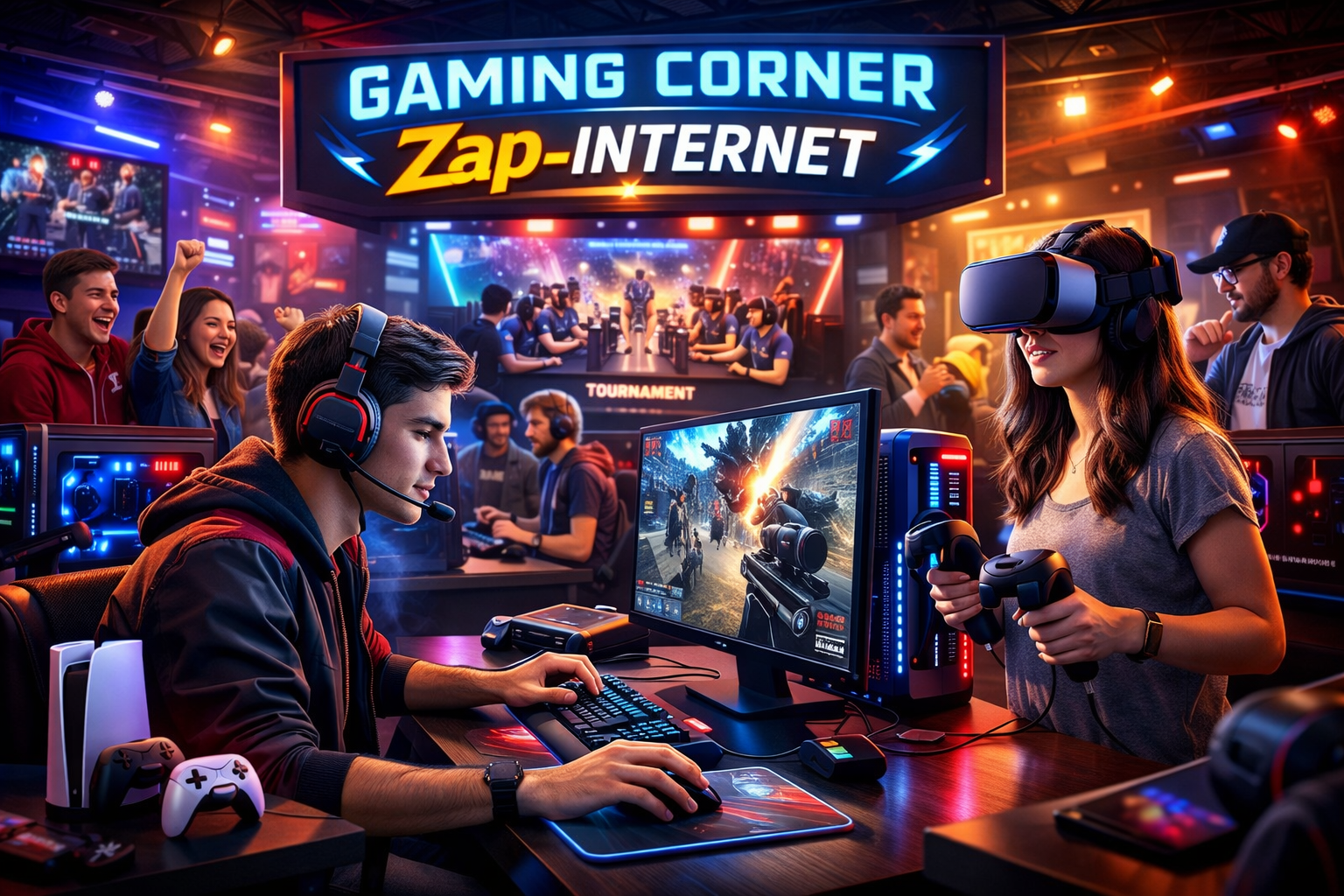
The phrase gaming corner zap-internet might sound like a simple combination of trendy words at first glance. However, when you look deeper, it represents something much bigger. It reflects the evolution of gaming spaces powered by high-speed internet, seamless connectivity, and immersive digital experiences. In today’s connected world, a gaming corner is no longer just a desk with a console. It is a performance-driven ecosystem supported by reliable internet infrastructure.
Gaming has transformed from a solitary hobby into a global, competitive, and social experience. The role of fast and stable internet has become central to everything—from competitive esports to casual multiplayer sessions. When gamers talk about lag, ping, or server drops, they are essentially discussing internet performance. This is where the concept of “zap-internet” comes into play: lightning-fast, low-latency connectivity designed to keep gameplay smooth and uninterrupted.
In this article, we will explore the gaming corner zap-internet concept in depth. We will examine its components, the technology behind it, its benefits for gamers, and how it is shaping the future of interactive entertainment. Let us break it down in a structured and expert-driven way, while keeping the tone accessible and practical.
Understanding the Concept of Gaming Corner Zap-Internet
A gaming corner is traditionally a designated area where someone sets up their gaming equipment. It may include a console, PC, gaming chair, lighting, sound system, and accessories. However, the modern gaming corner goes beyond hardware. It revolves around digital connectivity. Without strong internet, even the most powerful setup cannot deliver optimal performance.
Zap-internet refers to ultra-fast and responsive internet connectivity. Think of it as broadband engineered for speed, low latency, and consistent performance. In competitive gaming, even milliseconds matter. A delay of 20–30 milliseconds can be the difference between winning and losing in a high-stakes match.
When combined, gaming corner zap-internet becomes a synergy of environment and infrastructure. It is not just about aesthetics or equipment. It is about performance optimization. Gamers are increasingly designing their spaces around connectivity—placing routers strategically, using wired Ethernet connections, and upgrading to fiber-based services.
Moreover, the rise of cloud gaming and online streaming platforms has intensified the need for robust internet connections. Without strong upload and download speeds, live streaming becomes unstable, and cloud-based gameplay becomes frustrating. Therefore, the concept is not just trendy—it is essential.
The Technical Backbone: Why Internet Speed Matters in Gaming
Internet speed is often misunderstood. Many people think that high download speed alone guarantees good gaming performance. In reality, several factors determine how smooth your gaming experience will be.
First, latency (ping) plays a crucial role. Latency measures how quickly data travels between your device and the game server. Low latency ensures that your actions in the game happen instantly. High latency causes delays, which gamers refer to as lag.
Second, stability matters more than peak speed. A connection that fluctuates between high and low speeds can disrupt gameplay. Packet loss, jitter, and inconsistent bandwidth can ruin competitive sessions. A zap-internet setup emphasizes consistency over occasional bursts of speed.
Third, upload speed is equally important, especially for streamers. Platforms like Twitch and YouTube require stable upload bandwidth to broadcast gameplay in high definition. A weak upload connection results in blurry streams and dropped frames.
Additionally, multiplayer titles such as Call of Duty: Warzone and Fortnite rely on real-time synchronization. Any delay can negatively affect reaction times and overall competitiveness. This is why gamers prioritize fiber-optic connections and wired Ethernet setups in their gaming corners.
Designing the Perfect Gaming Corner for Maximum Performance
Creating a gaming corner zap-internet setup involves strategic planning. It is not just about buying expensive equipment. It is about smart configuration and environment control.
Start with the internet source. Fiber-optic internet is currently the gold standard for gamers. It provides higher speeds and lower latency compared to traditional DSL or cable connections. Position your router centrally and avoid physical obstructions that can weaken Wi-Fi signals.
For serious gamers, a wired Ethernet connection is strongly recommended. Wi-Fi is convenient, but Ethernet delivers lower latency and more consistent speeds. Running a cable directly from the router to your PC or console eliminates many connectivity issues.
Next, focus on hardware alignment. High-refresh-rate mechanical keyboards, monitors, responsive mice, and noise-canceling headsets contribute to a competitive edge. The gaming corner should be ergonomic, comfortable, and free from distractions.
Lighting and acoustics also matter. LED backlighting reduces eye strain during long sessions. Acoustic panels can improve audio clarity. When combined with zap-internet, these enhancements create a fully optimized digital battlefield.
The Rise of Online Multiplayer and Esports
The explosion of esports has reshaped how gaming corners are designed. Competitive gaming is no longer limited to LAN parties. Today, players compete globally in tournaments hosted online.
Professional esports titles like League of Legends and Counter-Strike 2 demand ultra-low latency connections. Even minor network fluctuations can affect performance.
Streaming culture has also amplified the importance of internet quality. Streamers are not only playing games but also interacting with live audiences. Real-time chat engagement requires stable connectivity. Any interruption can damage credibility and viewer trust.
Furthermore, cloud gaming platforms such as Xbox Cloud Gaming are redefining the gaming landscape. Instead of relying solely on local hardware, games are processed remotely and streamed to devices. This model heavily depends on high-speed internet.
Gaming corner zap-internet setups are becoming essential for anyone aspiring to enter the competitive or streaming arena.
Benefits of Gaming Corner Zap-Internet for Casual Gamers
Not every gamer is a professional. However, casual gamers also benefit significantly from optimized internet setups.
First, downloads are faster. Modern games can exceed 100 GB in size. With high-speed internet, updates and patches install quickly, reducing downtime.
Second, cooperative multiplayer sessions become seamless. Playing with friends without lag improves enjoyment and immersion. Communication through voice chat remains clear and uninterrupted.
Third, digital purchases and cloud saves become more reliable. Platforms like Sony Interactive Entertainment and Microsoft provide online services that depend on stable connectivity.
Ultimately, a gaming corner zap-internet environment enhances convenience and reliability, even for non-competitive players.

Security and Stability Considerations
With increased connectivity comes increased risk. Gamers must prioritize cybersecurity within their gaming corners.
Using strong passwords, enabling WPA3 encryption, and updating firmware regularly are essential steps. Network attacks, including DDoS attempts, can disrupt online matches.
Firewalls and antivirus software add additional layers of protection. Professional gamers often use VPN services to protect IP addresses during high-profile competitions.
Stability also requires proper bandwidth management. If multiple devices are streaming or downloading simultaneously, gaming performance may suffer. Quality of Service (QoS) settings on routers allow prioritization of gaming traffic.
Security and performance go hand in hand. A true gaming corner zap-internet setup is both fast and protected.
Future Trends in Gaming Corner Zap-Internet
The future of gaming is deeply tied to internet innovation. The rollout of 5G and advanced fiber networks will further reduce latency and increase bandwidth availability.
Virtual reality and augmented reality gaming will demand even stronger connections. Immersive environments require rapid data transmission to maintain realism.
Artificial intelligence-driven network optimization may soon adjust bandwidth dynamically based on gameplay demands. This will make lag almost obsolete.
As technology evolves, gaming corners will become smarter and more connected. Zap-internet will no longer be a luxury; it will be the standard.
Conclusion
Gaming corner zap-internet represents the intersection of environment, hardware, and connectivity. It highlights how essential internet performance has become in modern gaming culture.
From competitive esports professionals to casual players, everyone benefits from optimized connectivity. Low latency, stable bandwidth, and strong security measures transform ordinary gaming spaces into high-performance digital arenas.
As internet technology continues to advance, gaming experiences will become faster, smoother, and more immersive. The gaming corner of tomorrow will not just be about powerful graphics cards or flashy lighting. It will be about intelligent, high-speed connectivity that keeps players connected to the world without interruption.











Post Comment