fusion energy news: Hope & Hurdles Ahead
Introduction
You have probably heard the hype. Fusion energy is the holy grail of clean power. It promises endless electricity with no carbon emissions and barely any radioactive waste. For decades, it always seemed thirty years away. But lately, the fusion energy news has felt different. It feels real. You see headlines about net energy gain, burning plasmas, and billion dollar investments from Silicon Valley. It is exciting, and it can also be confusing. Is the dream finally here? Or are we still chasing a mirage?
I remember reading about fusion as a kid and thinking it was pure science fiction. Now, as an adult following the research closely, I can tell you the last two years have been a genuine turning point. This article will walk you through the latest breakthroughs, the stubborn challenges that remain, and what this all means for your future electricity bill. You will learn about the major experiments making waves, the private companies racing for a breakthrough, and the honest timeline we should expect. Let’s cut through the noise together.
What Is Fusion Energy? A Quick Refresher
Before we dive into the fusion energy news, let us quickly cover the basics. Fusion is the process that powers the sun. You smash two light atomic nuclei together at extreme temperatures and pressures. They combine into a heavier nucleus. In the process, you release a massive amount of energy.
Think of it as the opposite of fission. Fission splits heavy atoms like uranium. That is what current nuclear plants do. Fusion combines light atoms like hydrogen. It produces no long lived radioactive waste. It cannot melt down. The fuel, isotopes of hydrogen called deuterium and tritium, is abundant. Deuterium comes from seawater. Tritium can be bred from lithium. So in theory, fusion gives you unlimited clean energy with very few downsides.
The problem? Recreating a star on Earth is brutally hard. You need temperatures over 100 million degrees Celsius. No material can contain that heat directly. So scientists use powerful magnetic fields or lasers to hold the superhot plasma in place. For decades, they have fought against instabilities, heat loss, and energy balance. But the latest fusion energy news shows they are finally winning some of these battles.
The Big Headline: Net Energy Gain Achieved
Let us start with the most stunning piece of fusion energy news in decades. In December 2022, researchers at the National Ignition Facility (NIF) in California did something historic. For the first time, they achieved a net energy gain from a fusion reaction. They called it ignition.
Here is what happened. NIF uses 192 giant lasers to blast a tiny pellet of hydrogen fuel. The lasers compress the pellet to unimaginable pressures. The fuel fuses, releasing a burst of energy. In that December experiment, the fusion reaction produced about 3.15 megajoules of energy. The lasers had delivered 2.05 megajoules. That means more energy came out than went into the fuel. It was a true scientific first.
You should know that this does not mean fusion power plants are around the corner. The lasers themselves are incredibly inefficient. They drew roughly 300 megajoules from the wall to produce those 2.05 megajoules. So from a total system perspective, it was still a loss. But the principle was proven. The physics barrier had fallen.
Since then, NIF has repeated the feat several times. Each attempt gives them more data. The fusion energy news from NIF is now consistently positive. They are improving target design and laser precision. However, NIF is a research facility, not a power plant design. Its method, called inertial confinement fusion, works in bursts. A power plant would need to do this many times per second. That is a huge engineering leap.
Magnetic Confinement: The Other Giant Leap
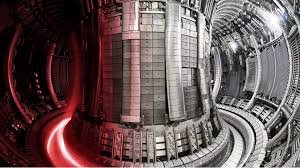
While NIF grabbed headlines, another approach has been quietly advancing. Magnetic confinement fusion uses enormous donut shaped devices called tokamaks. The most famous one is ITER, the international experiment under construction in France. But the real fusion energy news lately comes from a smaller tokamak in China.
In 2023, China’s EAST reactor (Experimental Advanced Superconducting Tokamak) set a new record. It sustained a plasma at 70 million degrees Celsius for over 17 minutes. That is incredible stability. Earlier this year, they pushed further. They held a plasma at 120 million degrees for 101 seconds. These are not just numbers. They prove that you can keep a burning plasma stable for commercially relevant timescales.
Why does this matter? A fusion power plant needs to run continuously for days or months. Sustaining the plasma is one of the hardest parts. The plasma wants to wobble, cool, or just snuff out. EAST’s progress shows that advanced magnetic fields and heating systems can tame it.
I have visited a tokamak control room once. It is surreal. You see a glowing ring on a screen, dancing like a living thing. The operators make tiny adjustments, and the whole plasma shifts. Watching EAST’s long pulse records, I felt genuine hope. They are learning to speak the plasma’s language.
Private Companies Enter the Race
Government labs like NIF and EAST are not alone anymore. The fusion energy news today is also full of private startups. In the last five years, over 30 companies have raised billions of dollars. Some are household names backed by billionaires. Others are quiet engineering shops.
Commonwealth Fusion Systems (CFS) is the current leader. Spun out of MIT, they are building a tokamak called SPARC. Their innovation is high temperature superconducting magnets. These magnets are much stronger and smaller than traditional ones. That means you can build a cheaper, more compact reactor. They aim to demonstrate net energy from SPARC by 2026. If they succeed, the timeline to commercial fusion could accelerate by a decade.
Another exciting player is Helion Energy. They are using a different design called a field reversed configuration. Helion claims they can directly capture electricity from the fusion reaction without a steam turbine. That would be revolutionary. They have already built several prototypes. Their latest, Polaris, is expected to demonstrate net electricity production soon. I have to admit I am skeptical. But Helion has attracted major funding, including from OpenAI’s Sam Altman. They might just surprise everyone.
Then there is TAE Technologies. They have been working on fusion for over 20 years. Their approach uses a colliding beam design with an unusual fuel called hydrogen boron. This fuel produces no neutrons, meaning very little radioactivity. The challenge is that hydrogen boron requires temperatures ten times hotter than deuterium tritium. TAE says they have achieved those temperatures. We are waiting for independent confirmation.
The Challenges That Remain
Now for the sobering part. For all the amazing fusion energy news, major hurdles remain. Let me walk you through them honestly.
First is the tritium problem. Most near term fusion designs use tritium as fuel. Tritium is radioactive and decays quickly. There is almost no natural tritium on Earth. We have to breed it inside the reactor by surrounding the plasma with lithium. That breeding process has never been proven at scale. Without a reliable tritium supply, you cannot run a fleet of fusion plants.
Second is materials science. The neutrons produced by fusion are extremely energetic. They slam into the reactor walls, making them brittle and radioactive over time. We do not yet have a material that can survive that bombardment for decades. Scientists are testing advanced steels and even liquid metal walls. But it will take years of real reactor exposure to validate them.
Third is economics. Even if you build a working fusion reactor, can it compete with solar and wind? Renewables have become incredibly cheap. Batteries are also dropping in price. Fusion might only make sense for baseload power or industrial heat. The levelized cost of electricity from a first of a kind fusion plant will likely be high. We need to see if costs can drop like they did for solar.
Fourth is operational complexity. A fusion plant is not a simple device. It requires cryogenics, vacuum systems, neutron shielding, and tritium handling. Every component must work perfectly for years. The engineering is at least as hard as the physics.
I do not mention these challenges to discourage you. I mention them because honest conversations lead to smarter investments. The fusion energy news is wonderful, but we must keep our feet on the ground.
Recent Breakthroughs You Might Have Missed
Beyond the big headlines, smaller pieces of fusion energy news are quietly adding up. Here are a few that impressed me.
In early 2024, researchers at the DIII D National Fusion Facility in San Diego solved a long standing problem called the tearing mode instability. This is a magnetic disturbance that can halt the plasma. They used a technique called electron cyclotron current drive to actively suppress it. Think of it as smoothing out a wrinkle in a carpet before it becomes a trip hazard. This work makes long pulse operation much more reliable.
Another cool development came from the University of Rochester. They used machine learning to optimize laser pulses for inertial confinement fusion. The AI found pulse shapes that reduced instabilities by 50 percent compared to human designed pulses. This is a perfect example of how software can accelerate physics.
Also, a team in the UK at the Culham Centre for Fusion Energy developed a new exhaust system for tokamaks. They call it the Super X divertor. It spreads the heat load over a larger area, reducing peak temperatures. This could solve the heat exhaust problem that threatens to melt reactor walls. Early tests look very promising.
What Does This Mean For You?
You might be wondering how this fusion energy news affects your life today. The honest answer is not much yet. Fusion is not going to power your home in the next five years. But the direction is clear. The probability of commercial fusion in your lifetime has gone from unlikely to plausible.
In the next decade, expect to see the first pilot plants. They will be expensive and experimental. They might produce power for a few hours at a time. But they will prove the technology works. Then, in the 2040s, you might see the first commercial plants come online. These will likely be large scale facilities serving industrial customers or grid baseload.
The real payoff comes later. If fusion scales, it could provide clean, reliable power to every corner of the planet. It could desalinate water, produce synthetic fuels, and support energy intensive industries like steel and cement. It could be the backbone of a zero carbon grid that does not rely on weather or batteries.
But here is my personal take. Do not wait for fusion to solve climate change. We already have solar, wind, hydro, and fission. Those technologies work today. Fusion is an incredible long term bet. It is the perfect complement to renewables. But we need to act now on climate. So support fusion research, yes, but also install solar panels on your roof and vote for clean energy policies. Fusion is the future. But we must survive the present.
Comparing Fusion To Other Clean Energy Sources
Let us put fusion in perspective. How does it stack up against existing options?
Solar and wind are cheap and fast to deploy. But they are intermittent. You need storage or backup for calm, dark nights. Batteries are improving, but they are not cheap enough for long term seasonal storage.
Nuclear fission is reliable and carbon free. But public fear, high costs, and waste disposal issues have slowed its growth. New designs like small modular reactors could help, but they still face regulatory hurdles.
Hydropower is great, but most good sites are already dammed. It also has environmental impacts.
Geothermal is wonderful in volcanic regions but not available everywhere.
Fusion would offer baseload power with no risk of meltdown, minimal waste, and no carbon emissions. It would run day and night, rain or shine. It would produce massive amounts of power from tiny amounts of fuel. A single grape sized pellet of deuterium tritium could produce as much energy as a ton of coal.
The downsides? Fusion plants will likely be expensive to build. They require high tech components and skilled operators. They are not something you can put on every street corner. They will probably be large, centralized facilities, much like today’s nuclear plants.
But for many energy experts, fusion is the best long term solution. It combines the reliability of nuclear with the cleanliness of renewables. And the fuel is essentially unlimited. That is why the fusion energy news generates so much excitement.
The Role Of International Collaboration
One aspect of fusion energy news that often gets overlooked is global cooperation. ITER, the giant tokamak in France, involves 35 nations. That includes China, the United States, Russia, India, the European Union, Japan, and South Korea. These countries do not always get along on other issues. But on fusion, they work together.
Why? Because fusion offers such huge benefits that it transcends politics. No single nation has all the resources to build ITER alone. By pooling money and expertise, they move faster. The shared goal is a peaceful, clean energy source for all humanity.
I find this inspiring. In a world full of conflict, fusion is a rare beacon of collaboration. The knowledge gained is published openly. The designs are shared. Of course, private companies are more secretive because they want profits. But the basic science remains global.
This cooperation also reduces the risk of weaponization. Fusion technology is not good for making bombs. Unlike fission, you cannot easily divert fusion fuel into a weapon. That makes it a much safer international energy source.
When Will We Actually See Fusion Power?
This is the question everyone asks. Let me give you the most honest answer I can.
Based on the current fusion energy news, experts estimate a realistic timeline as follows.
By 2030, we will see several experiments achieve net energy gain repeatedly. SPARC and possibly other private tokamaks will demonstrate sustained burning plasmas. NIF will continue to refine laser fusion.
Between 2035 and 2040, the first pilot plants will connect to the grid. They will produce small amounts of power, maybe 50 to 100 megawatts. They will run intermittently as engineers learn to operate them reliably. These plants will be very expensive proof of concept machines.
By 2050, the first commercial plants could enter service. These will be larger, perhaps 500 megawatts. They will aim for high uptime and competitive costs. But even then, they will likely need government subsidies, just like early solar and wind did.
Widespread deployment will take longer. If fusion follows the path of other new technologies, it could be 2060 or 2070 before it makes a significant dent in global energy supply.
Does that sound far away? It is. But remember, solar took over 50 years from the first efficient cell to global dominance. Fusion is a much harder technology. The important thing is that the trajectory is upward. The pace is accelerating. And the fusion energy news today is better than it has ever been.
FAQs
-
What is the most recent fusion energy news?
The most recent fusion energy news includes repeated net energy gain experiments at NIF, long plasma pulses at EAST in China, and major funding rounds for private companies like Commonwealth Fusion Systems and Helion Energy. -
Is fusion energy safe compared to nuclear fission?
Yes, fusion is much safer. It cannot melt down. It produces no long lived radioactive waste. The reaction stops instantly if you lose containment. The main radioactive material is the reactor vessel itself, which has a shorter half life than fission waste. -
How close are we to commercial fusion power?
Most experts estimate commercial fusion power between 2040 and 2050. Pilot plants could arrive in the 2030s. Widespread deployment is likely after 2060. The timeline depends on funding, engineering breakthroughs, and sustained political support. -
Can fusion energy solve climate change?
Fusion can help, but it will come too late to be the primary solution. We need to cut emissions now using solar, wind, and fission. Fusion is a long term replacement for fossil fuels in baseload and industrial applications after 2050. -
Which private fusion company is leading the race?
Commonwealth Fusion Systems is widely seen as the leader due to its high temperature superconducting magnets and MIT pedigree. Helion Energy and TAE Technologies are also strong contenders with unique designs. -
What is the difference between inertial and magnetic confinement fusion?
Inertial confinement uses powerful lasers to compress a fuel pellet in a quick burst. Magnetic confinement uses giant magnets to hold a plasma steadily in a donut shape. Both are viable, but magnetic is further along for power plants. -
How much does fusion energy cost?
Right now, it is impossible to say because no commercial plant exists. Early plants will likely be expensive, perhaps $10 billion or more. Over time, costs could drop as manufacturing scales up, similar to solar panels. - Is there any radioactive waste from fusion?
Yes, but much less than fission. The neutron bombardment makes the reactor vessel walls radioactive. However, this waste decays to safe levels in about 100 years, compared to thousands of years for fission waste.
Conclusion
Let me sum it all up for you. Fusion energy has made incredible progress. We have achieved net energy gain. We have sustained plasmas for minutes. Private companies are innovating faster than governments. The news is genuinely positive.
But we are not done. Tritium breeding, materials science, and economics are still unsolved. Commercial fusion is likely decades away. That does not mean we should give up. It means we should invest wisely and keep our expectations realistic.
The path to fusion power is long, but the destination is worth it. Imagine a world with no fossil fuels, no meltdowns, no mountains of nuclear waste. That is the promise of fusion. The latest fusion energy news tells us that promise is closer than ever.
Now I want to hear from you. Does fusion excite you or make you skeptical? Are you following any particular project? Share your thoughts in the comments. And if you found this article helpful, pass it along to a friend who loves science and clean energy.














Post Comment