Martin Scorsese: The Brilliant, Brutal Genius Who Changed Cinema Forever
Introduction
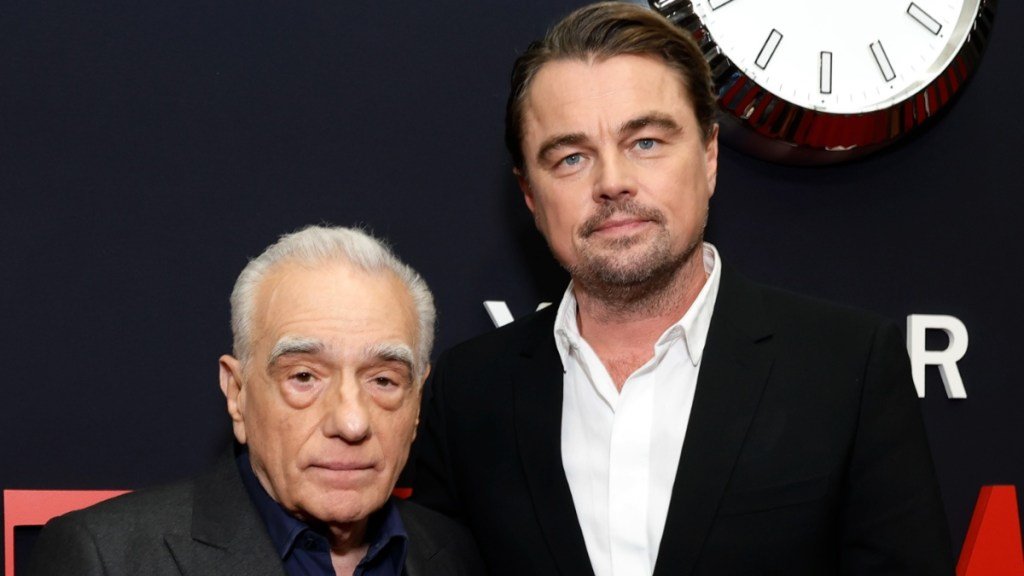
If you have ever sat through the opening minutes of Goodfellas and felt your pulse quicken without knowing exactly why, you have already experienced what Martin Scorsese does better than almost anyone alive. His films do not just tell stories. They pull you in, shake you around, and leave you staring at a blank screen wondering what just happened to you.
Martin Scorsese is widely considered one of the greatest and most influential directors in the history of cinema. That is not a casual claim. Critics, filmmakers, and film scholars across the world have said it repeatedly over five decades. And when you actually sit down and trace his career from the gritty streets of Little Italy to the sweeping Oklahoma plains of Killers of the Flower Moon, you start to understand why.
In this article, you will get a full picture of who Scorsese is, where his artistic obsessions come from, what makes his filmmaking style so distinctive, and why his legacy matters not just to film lovers but to anyone who cares about storytelling. Whether you are new to his work or a longtime fan, there is something here for you.
Who Is Martin Scorsese? The Man Behind the Films
Martin Charles Scorsese was born on November 17, 1942, in Queens, New York. He grew up in the Little Italy neighborhood of Manhattan, the son of Sicilian immigrant parents. His childhood was not easy. He suffered from asthma as a boy, which meant he spent long stretches indoors while other kids played outside. His parents took him to the movies instead.
That is where everything started.
He did not just watch films casually. He absorbed them. He studied the way scenes were cut together, the way light fell on a face, the way music shifted the feeling in a room. By the time he was a teenager, he already knew he wanted to make movies. He went on to study film at New York University, earning both his undergraduate degree and a Master of Arts from NYU’s Tisch School of the Arts.
His early career was shaped by the New Hollywood movement of the late 1960s and 1970s, a period when young directors like Francis Ford Coppola, Brian De Palma, and George Lucas were rewriting the rules of American cinema. Scorsese fit right in. He was hungry, opinionated, and absolutely unwilling to make films the safe way.
The Signature Style of Martin Scorsese
Camera Work That Feels Alive
One of the first things you notice watching a Scorsese film is the camera. It moves with intention and personality. It tracks characters through rooms, pushes in during moments of tension, and pulls back to reveal how small a person is inside the chaos surrounding them.
Scorsese was among the earliest directors in the post-studio era to develop a truly distinctive visual grammar. His use of long tracking shots became legendary. The famous shot in Goodfellas where Henry Hill leads his date through the back entrance of the Copacabana nightclub is one of the most studied sequences in film history. The camera follows them for nearly three uninterrupted minutes, gliding through corridors and kitchens, capturing the seductive pull of that world without a single cut. You feel like you are right there with them. That is not an accident. That is precise, deliberate craft.
He also uses slow motion, freeze frames, and rapid-fire editing to create rhythm and emotional impact. These are not just stylistic tricks. They serve the story. When the editing slows down, you feel the weight of a moment. When it speeds up, your heart races with the character.
Music as a Storytelling Tool
Ask most people what they remember about a Scorsese film and there is a good chance music comes up almost immediately. His soundtracks are as iconic as his visuals. He does not use music the traditional way, to simply underscore what is happening on screen. He uses it to create contrast, irony, and emotional complexity.
In Goodfellas, he pairs rock and roll with scenes of brutal violence. The disconnect is intentional. It makes the violence feel casual, normalized, almost fun, which is exactly how those characters experienced it. That choice makes the film more disturbing and more honest at the same time.
In The Irishman, he uses melancholy, quieter songs to reflect the loneliness and regret of a man looking back on a life of violence. The music in both films is doing real narrative work.
Scorsese has said that he often chooses music before he shoots a scene, letting the song shape how the sequence comes together. That is a highly unusual approach, and it produces results that feel organic rather than calculated.
Violence as Moral Language
Here is something that confuses some viewers when they first encounter Scorsese’s work. His films are often graphically violent. But the violence never feels gratuitous if you are paying attention. It always means something.
Scorsese, along with a handful of other directors from his generation, helped develop the use of violence in serious drama as a way to illuminate moral and psychological truth. In Taxi Driver, the explosive finale is not exciting in a conventional sense. It is disturbing and sad. It forces you to sit with the uncomfortable reality of what Travis Bickle has become. In Raging Bull, the boxing scenes are brutal because the brutality is who Jake LaMotta is. The ring is just a more visible version of the war he wages inside himself every day.
When you watch violence in a Scorsese film, you are supposed to feel something complicated. That is the point.
The Major Films: A Walk Through the Filmography
Taxi Driver (1976)
If you want to understand Scorsese, start here. Taxi Driver stars Robert De Niro as Travis Bickle, a lonely, unstable Vietnam veteran working as a cab driver in New York City. The film is dark, uncomfortable, and genuinely unsettling. It is also brilliant.
The film was a major critical and commercial success and established Scorsese as a filmmaker of the first order. It won the Palme d’Or at Cannes. It introduced the world to Robert De Niro’s extraordinary range. And it gave cinema one of its most iconic characters.
Raging Bull (1980)
Shot in black and white, Raging Bull is the story of boxer Jake LaMotta, played by De Niro in what many consider one of the greatest performances in film history. De Niro gained sixty pounds for the role. But the film is not really about boxing. It is about jealousy, self-destruction, and the impossibility of escaping your own worst impulses.
The American Film Institute ranked Raging Bull as the fourth greatest American film ever made. It is the kind of movie that stays with you for days.
Goodfellas (1990)
This is probably Scorsese’s most beloved film. Goodfellas follows Henry Hill’s rise and fall inside the New York mob, narrated in Henry’s own voice with a sardonic energy that makes you half-admire and half-despise him throughout. The film is funny, terrifying, electrifying, and tragic, often within the same scene.
It is also a technical masterpiece. The editing, by Scorsese’s longtime collaborator Thelma Schoonmaker, is relentless and precise. The performances from Ray Liotta, Joe Pesci, and De Niro are exceptional across the board.
The Departed (2006)
After years of brilliant work that somehow kept missing the Academy Awards, The Departed finally won Scorsese his long-overdue Oscar for Best Director. The film is a tightly wound crime thriller set in Boston, featuring an extraordinary ensemble cast. It is arguably his most purely entertaining film, the one you can put on with a group of friends and watch everyone lean forward.
The Irishman (2019)
Released when Scorsese was 76 years old, The Irishman is a sprawling, contemplative meditation on violence, loyalty, and regret. It is his longest film and arguably his most personal. The film uses digital de-aging technology to show Robert De Niro, Joe Pesci, and Al Pacino across several decades. At three and a half hours, it demands patience. But if you give it that patience, it rewards you with something few films even attempt: an honest reckoning with what it costs a man to live the way these characters lived.
Killers of the Flower Moon (2023)
His most recent major film takes on one of the darkest chapters in American history: the systematic murder of Osage Nation members in 1920s Oklahoma following the discovery of oil on their land. With Leonardo DiCaprio and Robert De Niro, Killers of the Flower Moon is both a love story and an indictment. It is Scorsese at his most ambitious and most morally serious.
Scorsese’s Collaborators: The Team Behind the Vision
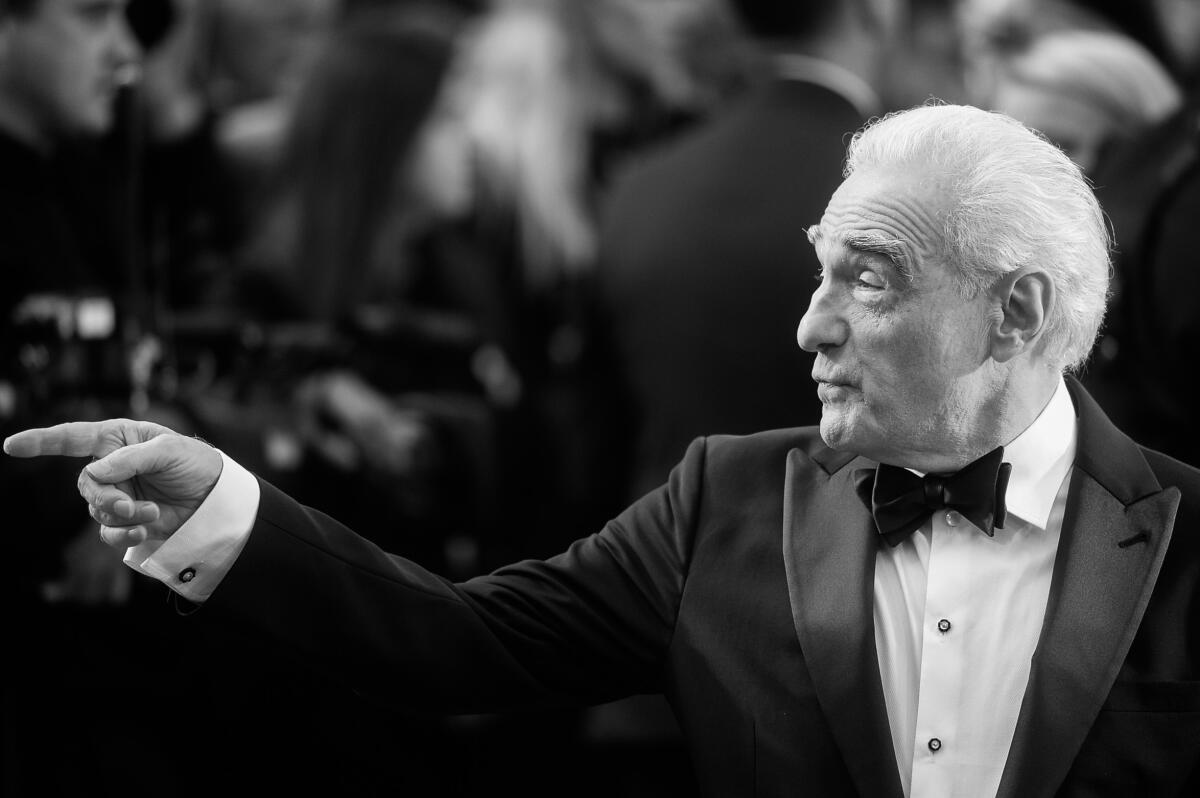
Great directors rarely work alone. Scorsese has built some of the most enduring creative partnerships in Hollywood history.
Robert De Niro was his most significant early collaborator. They made nine films together, including Taxi Driver, Raging Bull, GoodFellas, Cape Fear, and The Irishman. De Niro seemed to understand instinctively what Scorsese was going for, and the results were electric.
Leonardo DiCaprio became his primary collaborator in later years. Starting with Gangs of New York in 2002, the two have made six films together. DiCaprio brings a different kind of energy than De Niro, more controlled and calculating, which suited the direction Scorsese’s work took in the 2000s.
Thelma Schoonmaker is Scorsese’s editor and has been since Raging Bull. She has won three Academy Awards for her work with him. Editing is where a film is truly made or broken, and Schoonmaker’s collaboration with Scorsese has produced some of the most kinetically powerful sequences in cinema.
Scorsese Beyond the Films
Martin Scorsese is more than a director. He is a passionate advocate for film preservation and the history of cinema.
In 1990, he founded The Film Foundation, an organization dedicated to restoring and preserving classic films. The Foundation has helped restore hundreds of films that might otherwise have been lost forever. This is not a side project for Scorsese. It reflects how deeply he believes in cinema as a cultural inheritance that belongs to everyone.
He has also been a vocal critic of the Marvel Cinematic Universe, famously describing those films as “not cinema” in a 2019 interview. His comments sparked a massive public debate about what cinema means in the age of franchise filmmaking. Whether you agree with him or not, the fact that his opinion carries that much weight tells you everything about his standing in the film world.
What Makes Scorsese So Difficult to Imitate
Many directors have tried to capture the Scorsese style. Very few have come close. That is because his style is not really a collection of techniques you can copy. It is the expression of a particular sensibility, a specific way of seeing human beings and their moral struggles.
Scorsese grew up Catholic. He seriously considered becoming a priest before he chose film school. That religious background runs through almost everything he makes. His characters are haunted by guilt. They seek redemption and often fail to find it. They want to be good and find themselves incapable of it. That is Catholic guilt transmuted into cinematic form.
You cannot replicate that by just pointing your camera at a low angle or cutting to the beat of a Rolling Stones song. The technique works because the worldview behind it is real and coherent.
The Legacy of Martin Scorsese
You could make a strong argument that Scorsese is the most important American filmmaker of the last fifty years. His influence stretches in every direction. Quentin Tarantino has cited him repeatedly as a primary influence. Paul Thomas Anderson studied his films obsessively. David Fincher, Spike Lee, and countless others have absorbed elements of his approach.
His best films are studied in universities around the world. They are referenced in conversations about what cinema can do at its highest level. They have shaped the visual vocabulary of American film more broadly than almost any other single director’s work.
And he is still working. At 83 years old, Martin Scorsese continues to make films with the urgency and passion of someone who has something essential to say.
That is remarkable. That is rare. And it is one of the things that makes him unlike anyone else in the history of the medium.
Conclusion
Martin Scorsese’s career is a masterclass in artistic courage. He has consistently chosen difficult material over easy success. He has built a body of work that is challenging, honest, and unmistakably his own. And he has done it for more than five decades without losing the hunger that drove him as a young filmmaker in New York.
If you have not seen his major films, now is a genuinely good time to start. Begin with Goodfellas if you want to be immediately hooked. Move to Taxi Driver and Raging Bull if you want to understand the full depth of what he is capable of. Save The Irishman for when you have a quiet evening and the patience to let it breathe.
And if you have seen them all already, go back and watch one again. There is always something you missed the first time. That is the mark of truly great filmmaking.
What is your favorite Martin Scorsese film? Drop it in the comments and tell us why it gets under your skin.
Frequently Asked Questions
1. What is Martin Scorsese best known for? Scorsese is best known for directing crime dramas like Goodfellas, Taxi Driver, The Departed, and Raging Bull. He is widely regarded as one of the greatest and most influential directors in cinema history.
2. How many Oscars has Martin Scorsese won? Scorsese has won one Academy Award for Best Director, for The Departed in 2007. He has been nominated multiple times and has received numerous other major awards including BAFTAs, Golden Globes, and an AFI Life Achievement Award.
3. What are the defining characteristics of Martin Scorsese’s filmmaking style? His style is characterized by dynamic camera movements, long tracking shots, freeze frames, rapid editing, and the creative use of popular music. He also focuses heavily on complex moral characters and themes of guilt, redemption, and violence.
4. Who are Martin Scorsese’s most frequent collaborators? His most significant collaborators include actor Robert De Niro (nine films), actor Leonardo DiCaprio (six films), and editor Thelma Schoonmaker, who has edited his films since Raging Bull and won three Oscars for their work together.
5. Why is Martin Scorsese considered so influential? Scorsese helped redefine American cinema in the 1970s and has continued producing landmark films for fifty years. Filmmakers like Quentin Tarantino and Paul Thomas Anderson cite him as a primary influence. His visual techniques, approach to character, and use of music have become touchstones for generations of directors.
6. What is the best Martin Scorsese film for a first-time viewer? Goodfellas is widely considered the best starting point. It is entertaining and accessible while still showcasing everything that makes Scorsese exceptional: the camera work, the editing, the music, and the complex moral atmosphere.
7. Has Martin Scorsese ever made films outside the crime genre? Yes. He has made a musical biography (New York, New York), a religious drama (The Last Temptation of Christ), a historical epic (Gangs of New York), a children’s film (Hugo), and documentaries about music and cinema history. His range is wider than his crime film reputation suggests.
8. What is The Film Foundation and why did Scorsese create it? The Film Foundation is a nonprofit organization Scorsese founded in 1990 to restore and preserve classic films. It reflects his belief that cinema history is a cultural treasure that needs active protection. The organization has helped restore hundreds of endangered films.
9. What did Scorsese mean when he said Marvel films are “not cinema”? In a 2019 essay and interview, Scorsese argued that Marvel films function more like theme park attractions than cinema because they are designed around guaranteed audience responses rather than genuine artistic risk. He was not dismissing the people who make or enjoy those films. He was arguing for a distinction between entertainment franchises and cinematic art.
10. Is Martin Scorsese still making films? Yes. As of 2024, Scorsese remains actively working. Killers of the Flower Moon was released in 2023 to major critical acclaim, and he has several projects in development. He shows no signs of slowing down.













Post Comment